A free DOT inspection checklist that follows the federal inspection standards line by line. It has all 15 categories, 55 checks and the measurement that fails each one. Google Sheet, PDF or Excel.
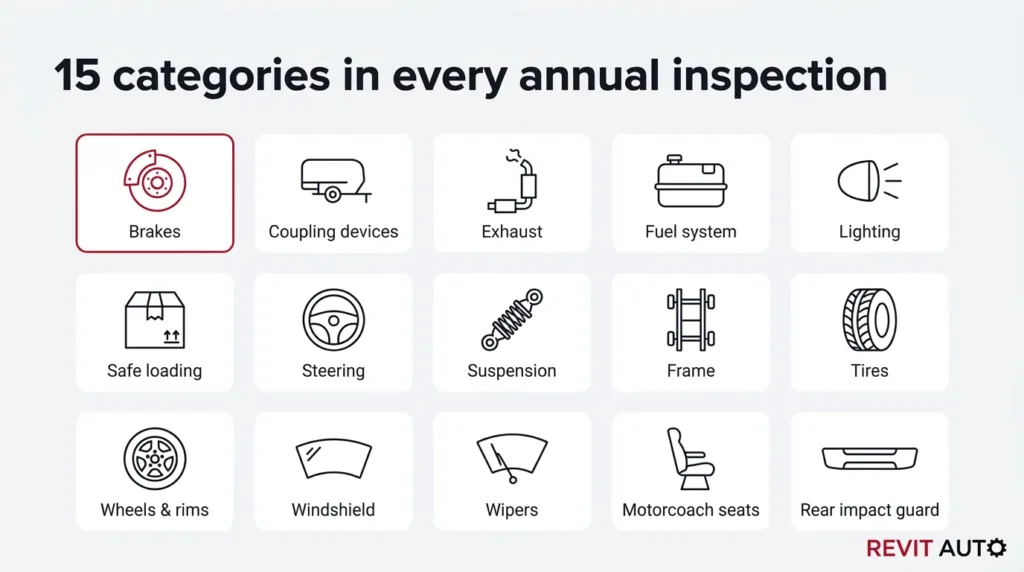
The checklist follows the federal minimum inspection standards item by item, in the same order and with the same letters.
A second tab tracks every unit’s due date, days left and how long to keep the report.
1. Get your copy. It opens as your own Google Sheet, or download the PDF or Excel file.
2. Make one form per vehicle. A tractor and each trailer need their own inspection, so duplicate the tab for each.
3. Run it a week early. Pick a result on every line and write down the measurement where there is one.
4. Fix what fails, then record the repair date.
5. Sign the certification and put a copy or a decal on the vehicle.
6. Add the date to the Fleet tracker tab, so you know when it’s due again.
Running 5 to 150 trucks and trailers, and want every unit pre-checked the same way before its annual inspection.
Doing your own annual inspections, and want the official fail limits on the page instead of in a binder.
One or two trucks, and want to know what the inspector will measure before you pay for the visit.
A truck that looks clean can still fail. Brakes and tires pass or fail by a fraction of an inch.
We pulled DOT’s own roadside data from October 2023 to October 2026. An inoperable lamp was cited 402,445 times, and brakes out of adjustment 351,923 times.
Both show up on a pre-check, a week before they cost you a second trip.
The full story, with every source, is in our annual DOT inspection checklist guide.
Yes. Enter your name and email, and you get a link to make your own copy, plus PDF and Excel versions. We’ll email you the links too.
Yes. It follows the federal inspection standards in order, from the brake system to the rear impact guard, with the fail condition on every line.
Yes, if the inspector is qualified. That means a state or federal training program, or at least a year of training or experience inspecting trucks.
14 months, where the vehicle is housed or maintained. A copy of the report or a decal also has to ride on the vehicle.
Yes. Each vehicle in a combination needs its own inspection and its own proof, including the tractor, every trailer and any dolly.
We do onsite DOT inspections at your yard across Maryland, DC and Northern Virginia, and fix most failed items in the same visit.
This resource explains federal and Maryland rules for general information. It isn’t legal advice. Confirm current requirements with FMCSA and the Maryland MVA.
202-827-5955
Damascus, MD 20872 US